

The cold chamber die casting process allows for the production of aluminum components with complex geometries, high dimensional accuracy, and excellent surface finishes, reducing the need for subsequent machining. This translates into significant cost savings, especially in high-volume series production.
From a mechanical standpoint, die-cast aluminum alloys offer a good balance between rigidity, strength, and low weight, making them ideal for applications where lightweight is crucial, such as the automotive, aerospace, electronics, and lighting industries.
Furthermore, these alloys exhibit excellent corrosion resistance and good thermal conductivity, making them suitable for protective casings and heat dissipation systems.
The alloys’ properties can be further optimized by selecting the composition best suited to the specific needs of the component.
The cold chamber die casting process allows for the production of aluminum components with complex geometries, high dimensional accuracy, and excellent surface finishes, reducing the need for subsequent machining. This translates into significant cost savings, especially in high-volume series production.
From a mechanical standpoint, die-cast aluminum alloys offer a good balance between rigidity, strength, and low weight, making them ideal for applications where lightweight is crucial, such as the automotive, aerospace, electronics, and lighting industries.
Furthermore, these alloys exhibit excellent corrosion resistance and good thermal conductivity, making them suitable for protective casings and heat dissipation systems.
The alloys’ properties can be further optimized by selecting the composition best suited to the specific needs of the component.
Aluminum’s high recyclability helps make it an environmentally sustainable choice, strengthening its role in modern production processes geared towards efficiency and reducing environmental impact.


Case Study

Product Description: Frame
Dimensions: 326x237x33.8 mm
Function: Support frame for an industrial PLC screen
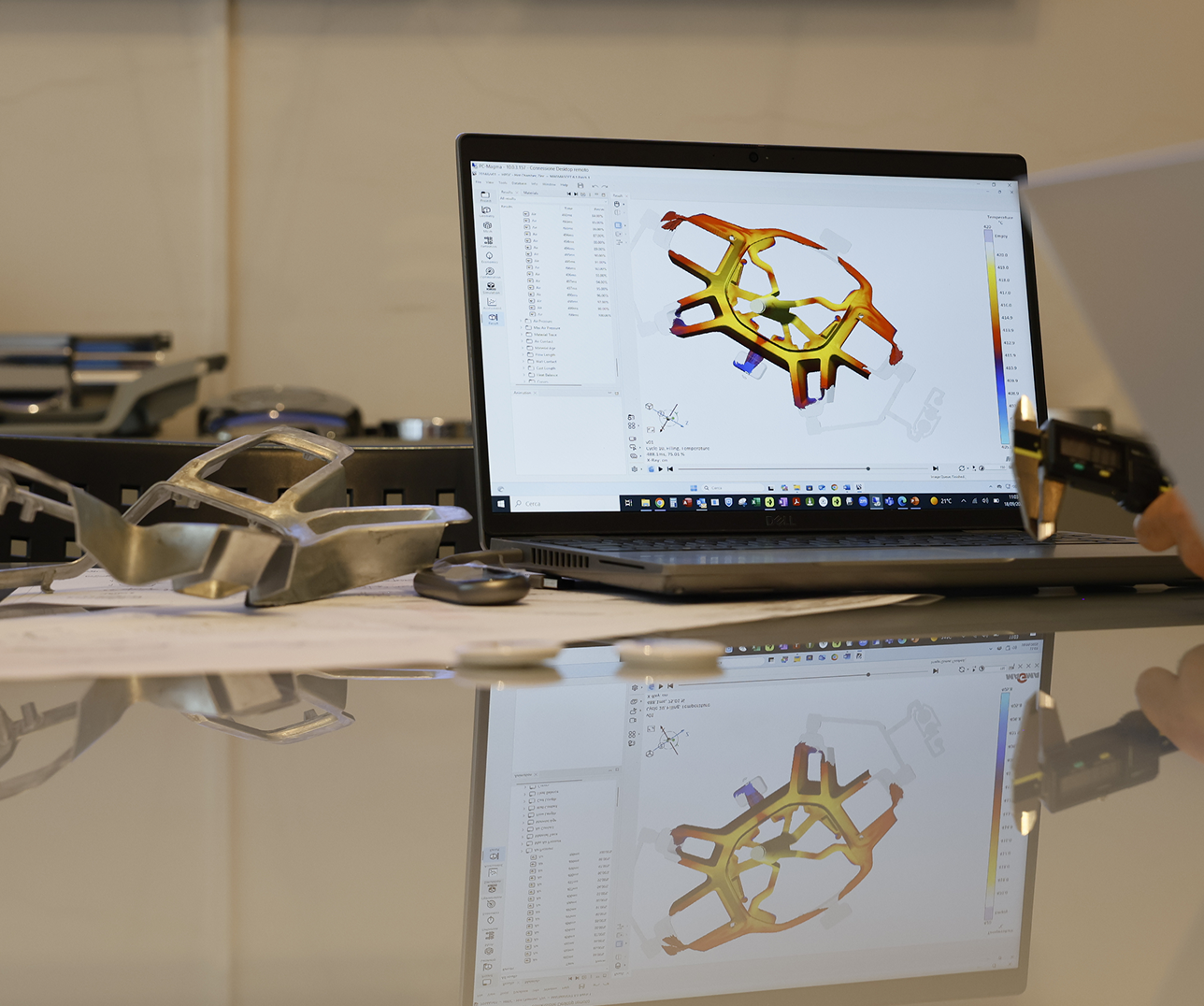
Analyzing the filling simulation results allowed us to correctly design the feed channels and discharge masses, positioning them in the most suitable areas to ensure optimal flow of the liquid metal. This ensures a uniform structure throughout the product, avoiding density differences that could cause excessive deformation during the die casting’s cooling.

Due to the presence of critical weld lines, great precision was required in the mold design and construction to prevent the formation of hanging burrs, which are unacceptable in an electronic product. Furthermore, creating a blanking mold with lateral movements required particular attention and precision.


We offer a vertically integrated approach to zinc and aluminum die casting, starting from the idea, to create the most functional products for our customers.
01. Co-Design
02. Tool design and construction
03. Die casting
04. Mechanical Operations
05. Painting & Chroming
06. AESI
07. Assembling
Bruschi Journal
Stay updated with the latest trends in die casting, industry insights, and company events. Discover what’s shaping the future of zinc and aluminum foundry.

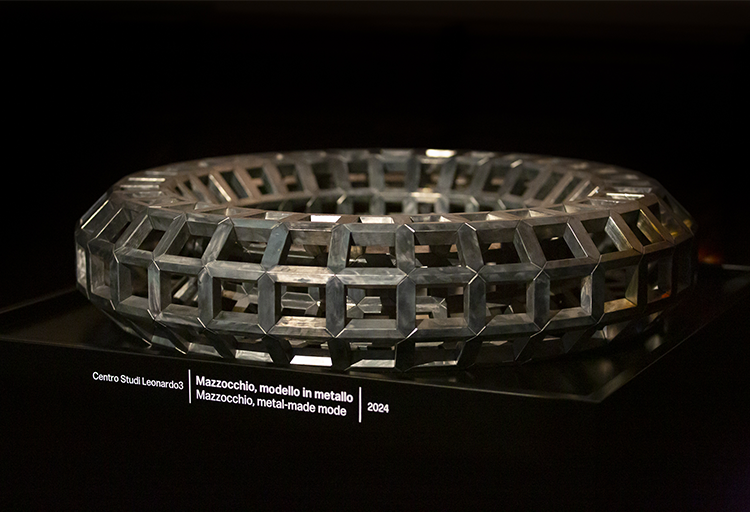
Bruschi brings Leonardo da Vinci’s Mazzocchio to life

Bruschi completes merger with Sapre


