Select Page

Zinc

Why choose Zama

Zinc die-casting alloys, commonly called Zama or Zamak, possess numerous properties that make them ideal for applications in various sectors, from the automotive industry to fashion (jewelry, buckles), to tools and electronic components.

Thanks to their low melting point, they can be used in the hot-chamber die casting process, which ensures rapid production times and high yields. Furthermore, the high fluidity of liquid Zamak allows for the production of thin-walled components, resulting in significant production savings thanks to reduced weight, without compromising product functionality.

The ability to achieve small details and tight tolerances directly through die casting allows the production of finished parts without the additional costs of subsequent machining. This feature also allows for the creation of complex shapes, optimizing mold design and reducing the number of components required in a system, with significant advantages during assembly.
Although often complex, Zamak die casting molds withstand a high number of cycles, ensuring high production volumes.

From an aesthetic standpoint, die-cast Zamak offers a high-quality surface, suitable for numerous surface treatments, including galvanizing, painting, and special coatings.
Zamak is also recyclable, and its use helps reduce waste and the environmental impact of the production cycle.
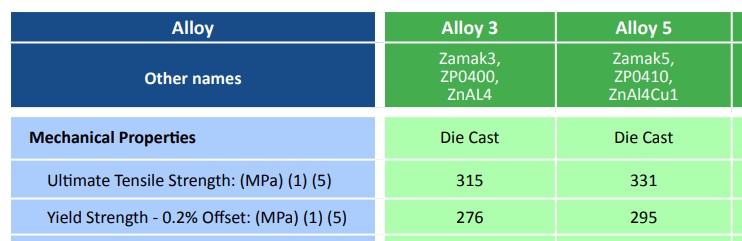
Developing a new project requires ensuring the best possible material is used; Zamak is often compared to aluminum alloys.

Zinc

Why choose Zama

Zinc die-casting alloys, commonly called Zama or Zamak, possess numerous properties that make them ideal for applications in various sectors, from the automotive industry to fashion (jewelry, buckles), to tools and electronic components.

Thanks to their low melting point, they can be used in the hot-chamber die casting process, which ensures rapid production times and high yields. Furthermore, the high fluidity of liquid Zamak allows for the production of thin-walled components, resulting in significant production savings thanks to reduced weight, without compromising product functionality.

The ability to achieve small details and tight tolerances directly through die casting allows the production of finished parts without the additional costs of subsequent machining. This feature also allows for the creation of complex shapes, optimizing mold design and reducing the number of components required in a system, with significant advantages during assembly.
Although often complex, Zamak die casting molds withstand a high number of cycles, ensuring high production volumes.

From an aesthetic standpoint, die-cast Zamak offers a high-quality surface, suitable for numerous surface treatments, including galvanizing, painting, and special coatings.
Zamak is also recyclable, and its use helps reduce waste and the environmental impact of the production cycle.
Developing a new project requires ensuring the best possible material is used; Zamak is often compared to aluminum alloys.

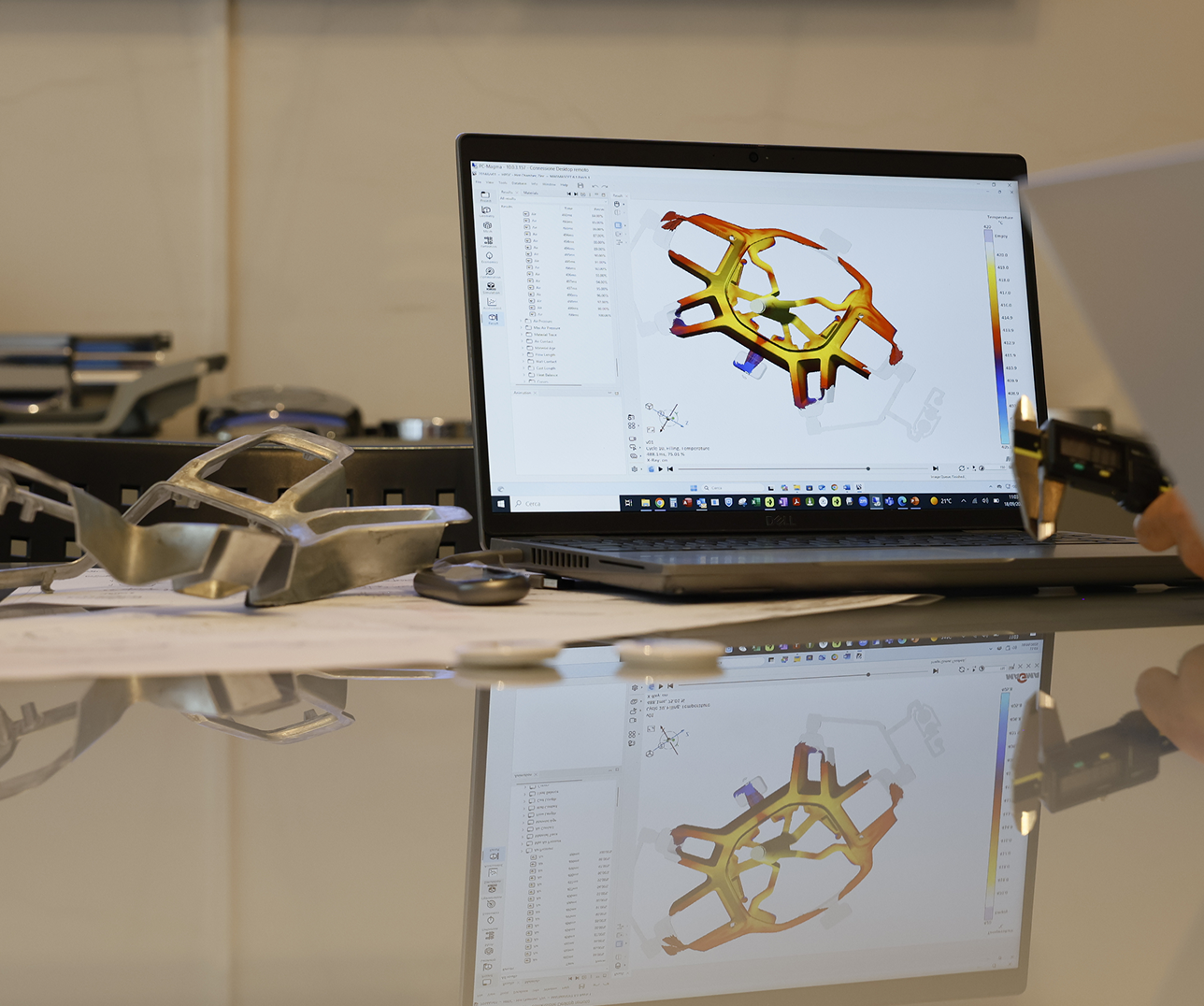
Thanks to the use of advanced simulation software and the expertise gained over 75 years of experience, Bruschi’s technical staff is able to offer customers the most suitable material for both the product’s function and the cost-effectiveness of the process.
Thanks to the use of advanced simulation software and the expertise gained over 75 years of experience, Bruschi’s technical staff is able to offer customers the most suitable material for both the product’s function and the cost-effectiveness of the process.
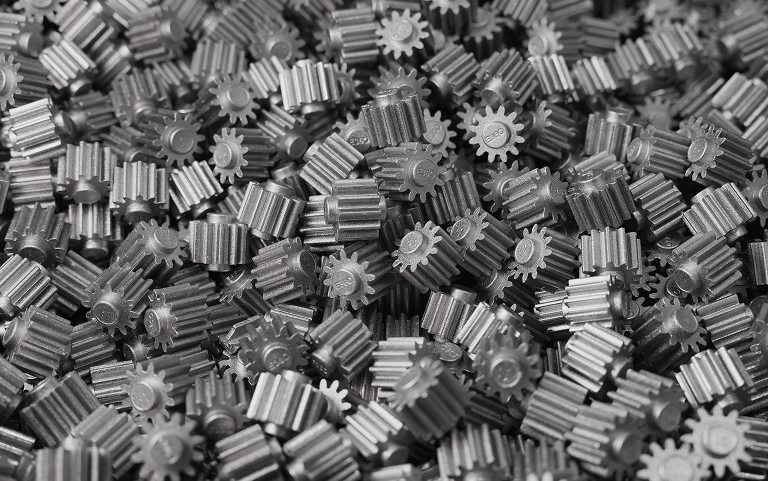
Versatility, quality, speed: the main advantages of zinc die casting

Case Study

Panic handle mechanism cover

Product Description: Cover
Dimensions: 145 x 52.7 x 37 mm
Function: Covers the mechanism of a panic exit device for security doors

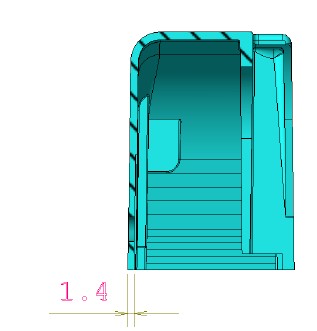
Main requirements that led to the choice of the zama alloy:
Surface quality suitable for painting with high aesthetic requirements.
The zamak die-cast reproduces the surface roughness of the mold, thus achieving surface finishes suitable for subsequent aesthetic treatments. In this case, powder coating.
Need for thin thicknesses to reduce the overall dimensions.
The high degree of flowability of cast zamak allows for excellent filling of the impressions even in the case of very thin thicknesses. In this case, filling simulation allowed for optimization of the feed channels to achieve the desired surface quality, despite the thin wall thicknesses. Vacuum molding was also essential both to improve filling and to obtain a defect-free die-cast part, suitable for the powder coating process.
Robust enough to withstand the stresses of the opening mechanism.
In this case, the mechanical properties of zamak made it possible to satisfy the mechanical resistance requirements necessary for the correct functioning of the opening system.

Positioning accuracy during assembly.
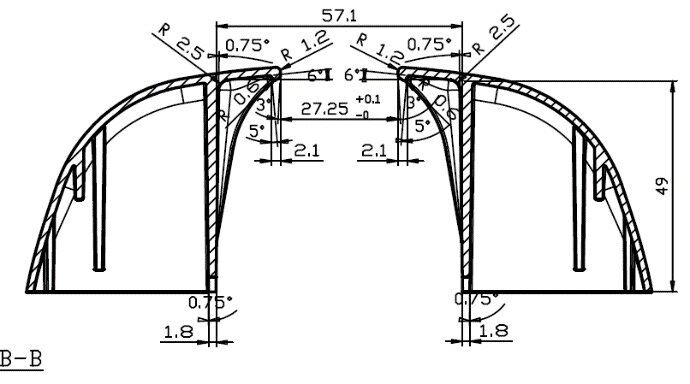
The precision required for correct assembly was met without the need for subsequent reworking.
Complete shape without mechanical processing to reduce the cost.
The meticulous design of a mold equipped with radial movements and inclined lifters allowed for the creation of undercut holes, meeting the required dimensional requirements. In this case, too, subsequent drilling was avoided, resulting in significant process savings.
Services

We offer a vertically integrated approach to zinc and aluminum die casting, starting from the idea, to create the most functional products for our customers.

01. Co-Design
Our co-design service, developed in close collaboration with the customer, improves product design and functionality. By analyzing the entire production process, our team performs simulations that enhance both performance and efficiency—saving time and reducing costs.

Learn more

02. Tool design and construction
With extensive experience in zinc and aluminum die casting, advanced simulation software, and close co-design with clients, Bruschi develops high-performance molds. These include innovative solutions like the vacuum valve—a technology first pioneered at Bruschi in 1983.

Learn more

03. Die casting
Bruschi processes 6,500 tons of zinc and 2,000 tons of aluminum per year, producing over 110 million components using hot-chamber die-casting machines. Our deep knowledge of this technology enables us to manufacture parts with high detail, thin walls, and excellent surface quality—fully tailored to customer needs.

Learn more

04. Mechanical Operations
Mechanical processes are an essential part of zinc and aluminum die-casting production. At Bruschi, custom automation and robotics projects significantly reduce production time, delivering ready-to-use components with no need for additional processing.

Learn more

05. Painting & Chroming
Zinc and aluminum components offer great freedom in surface finishing. Their smooth, compact, defect-free surface makes them ideal for a wide range of treatments: liquid and powder coating, enameling, chroming, and more. Bruschi supports each client in selecting the best treatment for their project—whether functional or aesthetic.

Learn more

06. AESI
Through our AESI division, Bruschi develops dedicated machines for specific mass production needs. With expertise in robotics, vision systems, pneumatics, dosing systems, coding, and induction heating, AESI meets even the most detailed technical requirements of projects worldwide.

Learn more

07. Assembling
Bruschi manages every stage of the production process, from zinc and aluminum ingot to final delivery. Assembly is fully integrated into this process. We design and develop robotic and automated systems to reduce cycle time and provide finished, ready-to-ship products to customers around the globe.

Learn more

Bruschi Journal

Stay updated with the latest trends in die casting, industry insights, and company events. Discover what’s shaping the future of zinc and aluminum foundry.
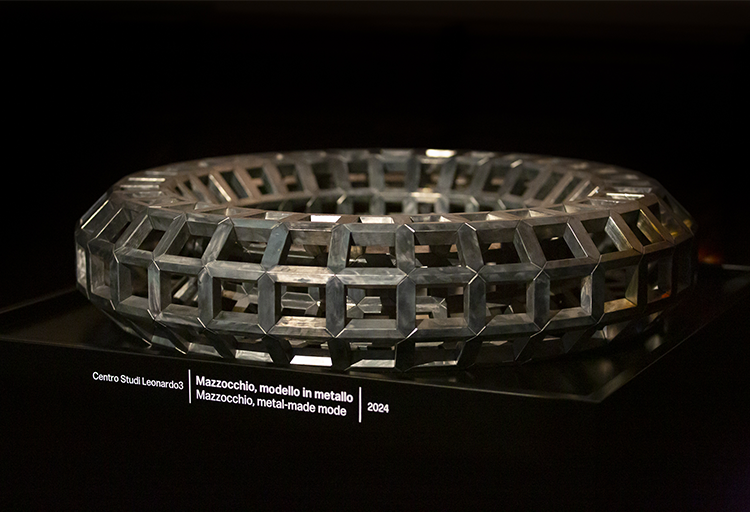
Bruschi brings Leonardo da Vinci’s Mazzocchio to life
Bruschi, commissioned by the Leonardo3 Museum – The World of Leonardo in Milan, has brought to life an extraordinary work inspired by Leonardo da Vinci’s […]
Bruschi completes merger with Sapre
We are pleased to announce that, effective December 1st, 2024, Bruschi will finalize its merger with Sapre, marking an important milestone in its growth strategy. […]
Thanks to all the participants in our webinar on the comparison between zamak and aluminum in die casting!
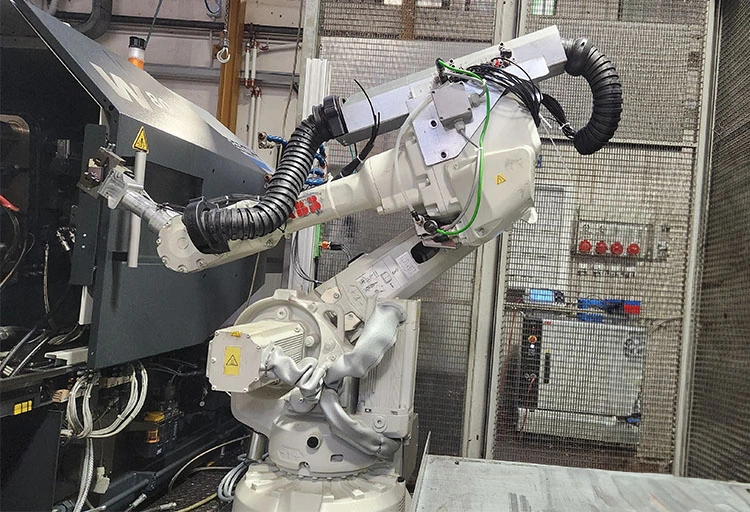
A heartfelt thank you to everyone who joined our webinar, “Comparing Materials in Die Casting: Advantages and Applications of Zamak and Aluminum.” It was inspiring […]
Advanced Precision Automation: Bruschi and the Advantage for the Automotive Industry
In 2023, Bruschi successfully completed an important innovation challenge in the development of zinc die-cast products, requested by a German company in the automotive sector, […]
Contact Us
Looking for specific information about our services? Fill out the form and our team will get back to you promptly with tailored support.

    First Name

    Last Name

    Company

    Email

    Message